
Moving to Los Cabos is one of the most life-changing decisions a family can make — and one of the most underestimated in terms of what it actually takes to do it well. The dream is easy to picture: school drop-offs with an ocean view, weekends on calm-water beaches, kids growing up bilingual, and a pace of life that most North American cities simply cannot offer. The reality is achievable — thousands of families have made this move — but it requires navigating visas, schools, healthcare, banking, and housing in a country that does things differently. This guide covers every step, in the right order, so moving to Los Cabos goes the way it should.
Whether you are 12 months out from your move date or already have your flight booked, work through this checklist from the top. The decisions stack on each other — where you live affects which school your children attend, which school you choose affects your timeline, and your timeline affects your visa path. Getting the sequence right saves real money and a significant amount of stress.
Why Families Are Choosing Los Cabos Right Now
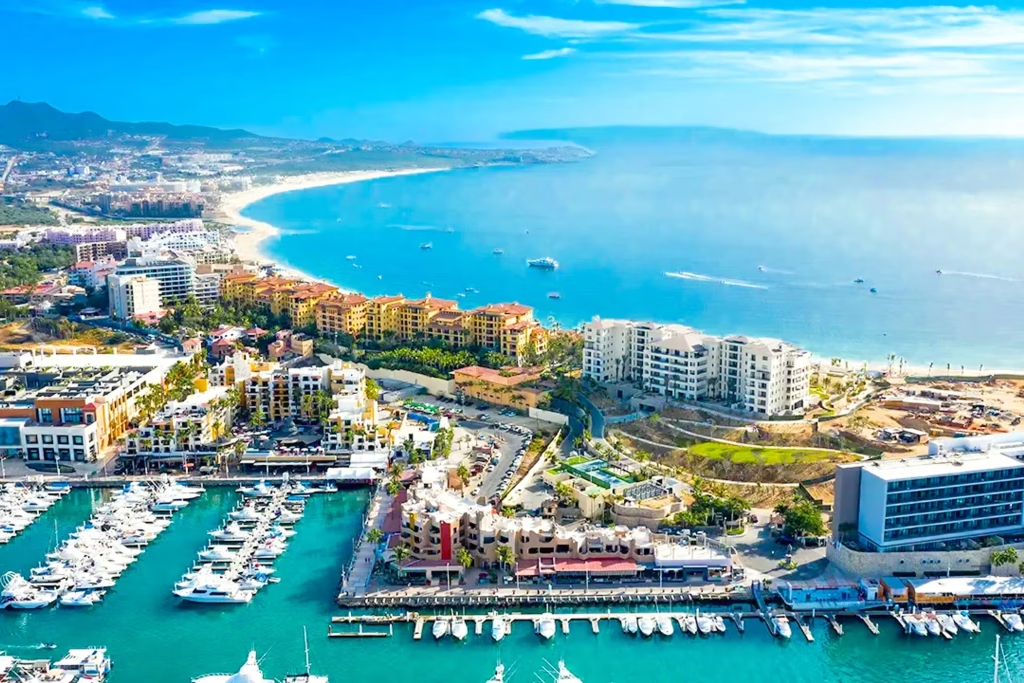
Los Cabos has changed considerably in the past decade. What was once primarily a resort destination is now a fully functioning city of roughly 350,000 people, with international schools, private hospitals, a growing expat community, and a real estate market that continues to attract families from across the US, Canada, and Europe. The reasons families specifically choose Los Cabos over other parts of Mexico tend to come down to three things.
Safety. Los Cabos consistently ranks among the safest municipalities in Baja California Sur. The communities where expat families settle are gated, well-lit, and actively managed. This is not a topic to gloss over — do your research for the specific neighbourhoods you are considering — but the overall picture is meaningfully better than the national headlines suggest.
School quality. The private bilingual and international school system in Los Cabos is genuinely strong. Colegio El Camino is one of only 25 schools in Mexico offering the full IB Continuum. Colegio Amaranto was the first school in the country to install SMART Boards in every classroom. These are not backup options — they are real schools that prepare children for international universities. Browse the full Los Cabos school directory to see every option across the region.
Quality of life. Year-round sunshine, two distinct coastlines — Pacific and Sea of Cortez — world-class golf, surf, and fishing, and a restaurant scene that punches well above its weight. For families that spend a lot of time outdoors, it is a difficult combination to match anywhere at a comparable cost.
Phase 1 — Research and Planning (6 to 12 Months Before Your Move)
Do not skip this phase. The families who struggle most with the move are almost always the ones who compressed the planning into three months and arrived without the groundwork in place.
Choose Where to Live First, Then Choose the School
This seems backward but it is not. Los Cabos stretches roughly 33 kilometres along the corridor between Cabo San Lucas in the west and San José del Cabo in the east. Where you live determines which schools are within a reasonable commute — and a 30-minute school run each direction adds up to five hours a week of driving before the end of the first month.
The strongest schools near Cabo San Lucas — Colegio El Camino, Colegio Amaranto, Delmar International, and Liceo Los Cabos — are clustered in the Pedregal and El Tezal areas. Families settling in communities like Palmilla or Club Campestre, which sit at the San José del Cabo end of the corridor, tend to rely on Colegio Misión and Colegio Alebrije. See the communities guide for a breakdown of which families live where and why. Browse current Los Cabos listings if you want to match a community to a school before you arrive.
Research Schools and Visit Before Committing
Most Los Cabos private schools require enrollment months in advance, and the best ones fill quickly. If you have school-age children, the school decision cannot wait until after you land. Read the full guide to the best international schools in Los Cabos, then contact your top two or three schools directly to understand their enrollment timelines and document requirements. Many schools will accommodate a campus visit during a pre-move trip, which is worth planning before you sign any lease.
Build a Realistic Monthly Budget
One of the most common planning mistakes is underestimating the cost of private school education when budgeting for the move. Private school tuition in Los Cabos typically runs between USD $3,000 and $8,000 per year depending on the school and grade level — but registration fees, uniforms, extracurricular activities, and school supplies add to that figure. A family with two school-age children should budget school costs separately from their housing number. Healthcare, utilities, and groceries in Los Cabos are cheaper than most North American cities; housing in the corridor communities most expat families prefer is not.
Visas and Legal Residency: What Your Family Needs
This is where most families get confused. The Mexican visa system has two distinct phases — the consulate application abroad and the INM exchange inside Mexico — and they involve different documents, different fees, and different government offices. The process is manageable once you understand the structure.
The Tourist Visa (FMM) — For Stays Under 180 Days
Citizens of the US, Canada, the UK, and most European countries enter Mexico on a tourist permit issued on arrival at the airport. This allows a stay of up to 180 days and costs nothing. For families doing an exploratory trip or a temporary relocation of less than six months, this is sufficient. You cannot legally work in Mexico on a tourist permit — but you can live, enroll children in school, and sign a lease.
Important: the 180-day clock starts on the day you enter Mexico and does not reset automatically when you cross the border. Plan your stays accordingly.
Temporary Residency — The Right Path for Most Relocating Families
For any family planning to stay longer than 180 days, a temporary residency visa (Residente Temporal) is the correct legal status. It is valid for one to four years, renewable, and opens up a range of practical benefits: the ability to get a Mexican driver’s licence, open a full bank account, receive IMSS coverage, and add family members on the same application.
To qualify in 2026, you need to demonstrate one of the following:
- Monthly income of approximately USD $4,400 for the past six months (from employment, pension, rental income, or dividends)
- Savings or investment balances of approximately USD $74,000 over the past 12 months — liquid assets only (cash, stocks, retirement accounts). Crypto and real estate equity do not count.
These thresholds are tied to Mexico’s UMA (Unidad de Medida y Actualización) and adjust annually. Confirm the current figure with your nearest Mexican consulate before applying, as consulates convert the UMA value to local currency differently. Property ownership alone does not qualify you for temporary residency under current Mexican immigration law—consulates evaluate applications using the income or savings tests above only, though documented property ownership can still support your file as evidence of ties to Mexico. For the most up-to-date requirements, visit the official INM website.
The process has two steps:
- Apply at a Mexican consulate in your home country. Bring your passport, six months of bank statements, the completed application form, and a passport photo. The consulate fee in 2026 is USD $56. Processing takes 1–10 business days.
- Exchange the visa for a residency card at INM inside Mexico within 30 days of arriving. This costs approximately USD $630 for a one-year card and requires proof of your Mexican address. The card can be renewed for one, two, or three additional years.
Spouses and children under 18 can be added to the same application. Bring marriage and birth certificates — apostilled if issued outside Mexico — for all family members.
Permanent Residency
After four years of temporary residency, you can apply for permanent status. To qualify via income in 2026, you need to show approximately USD $7,400 per month, or a savings balance of around USD $300,000. Permanent residency in Mexico is genuinely permanent — it does not require renewal — and is the long-term goal for most families who decide to stay. The application is made at INM inside Mexico.
Finding Your Home in Los Cabos
Housing in Los Cabos covers a wider range than most relocating families expect — from furnished condos in Cabo San Lucas starting around USD $1,500 a month, to homes in private corridor communities in the $3,000–$6,000 range, to luxury villas in Palmilla or Pedregal at the higher end of the market.
Rent First, Buy Later
Almost every experienced expat in Los Cabos will give you the same advice: rent for at least six to twelve months before you buy. Living in a community tells you things a property tour never will — the noise level at night, the school commute in real traffic, whether the neighbours are year-round residents or vacation rental guests, and how the community feels in August versus January. Renting first is especially important if your children’s school choice is still being finalised, since that decision often determines the right neighbourhood more than any other factor.
Buying Property: How the Fideicomiso Works
Foreigners cannot directly own property within 50 kilometres of the Mexican coastline — which covers virtually all of Los Cabos. Instead, ownership is held through a bank trust called a fideicomiso. The trust holds title to the property on the buyer’s behalf and gives the buyer all the rights of ownership: sell, rent, renovate, and pass to heirs. Annual trust fees are typically USD $500–$700 and the trust is renewed every 50 years. Working with an experienced local agent who can explain the closing process, notary fees, and tax implications is essential. Browse current listings or speak with James directly for guidance on the buying process in the communities you are considering.
Family Communities Worth Knowing
The communities most consistently chosen by relocating families with school-age children include:
- Palmilla — Mid-corridor, close to San José del Cabo schools, gated, beachfront access, strong expat community. One of the most established family enclaves in the region.
- Club Campestre — A private golf community in San José del Cabo, quieter pace, well-positioned for SJD schools, popular with families who want space and greenery rather than beachfront.
- Cabo del Sol — Mid-corridor location between the two cities, ocean views, golf, and convenient access to schools at both ends of the corridor.
See the full communities guide for a detailed breakdown of each neighbourhood.
Schools: The Decision That Shapes Everything Else
For families with children, the school decision is not a secondary consideration — it is often the primary driver of which neighbourhood you live in, what your weekly schedule looks like, and whether the move feels like it is working within the first year.
School Types in Los Cabos
Los Cabos private schools fall into three broad categories:
International and IB schools — Fully bilingual programs with international accreditation from the IB Organisation or Cognia. Colegio El Camino is the standout in this category, offering the full IB Continuum — PYP, MYP, and Diploma — making it the easiest school for international university entry. Browse the international schools directory.
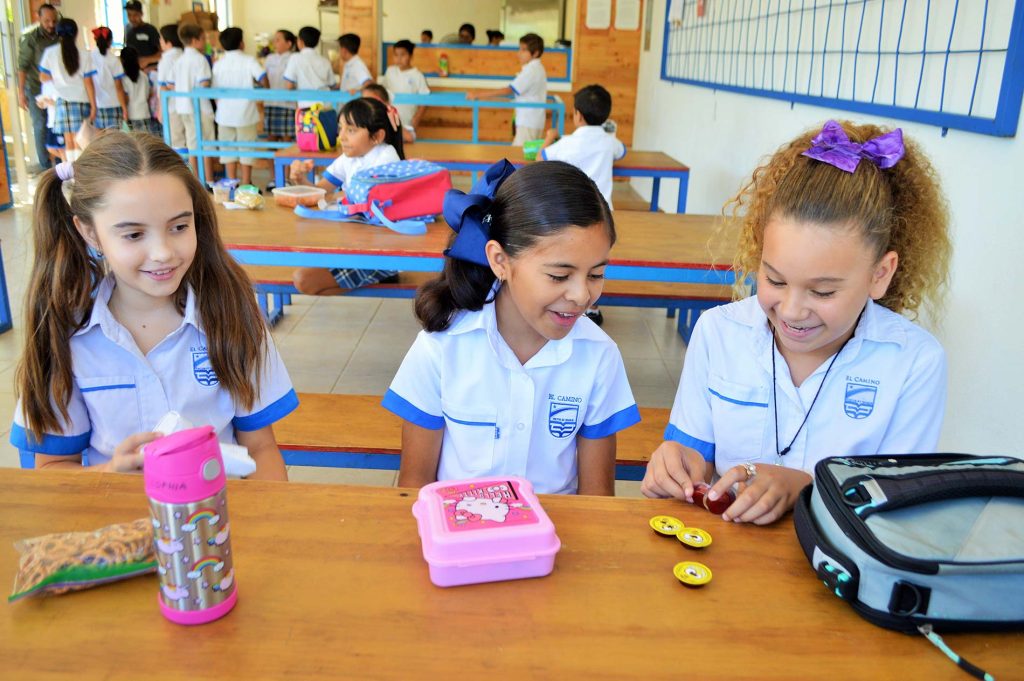
Bilingual private schools — SEP-registered private schools that teach in both English and Spanish, often aligned with Common Core or CEFR standards. Colegio Amaranto, Delmar International, Misión, Liceo, and Alebrije fall into this category. These are strong, affordable schools that produce genuinely bilingual graduates. Browse the bilingual schools directory.
The full directory covers every school in the region, filterable by location and type. Read the complete school comparison guide to understand how these categories differ before you contact schools.
School Enrollment Checklist
Most Los Cabos private schools require the following documents. Prepare these before you arrive — apostilling documents from abroad takes time:
- Certified copy of academic transcripts (apostilled if from the US, Canada, or most European countries)
- Birth certificate (apostilled)
- Immunization records (certificado de vacunación)
- Passport copies for the child and at least one parent
- Proof of address in Mexico (rental contract or utility bill)
- CURP (Mexican national ID number)
- Passport-style photos
Contact your target school at least 60 days before your planned start date. Enrollment spots — especially at El Camino and Misión — fill several months in advance for the August start.
Healthcare: What Families Need in Place Before They Arrive
Healthcare in Los Cabos is significantly better than the national headlines about Mexico suggest, and considerably cheaper than equivalent care in the US. The key is knowing which facilities to use and having the right insurance before you need it.
The Two Hospitals Expat Families Rely On
Two private hospitals consistently serve the international community in Los Cabos and are listed on the US Consulate’s approved provider list:
H+ Hospital Los Cabos — Located on the tourist corridor near the Koral Center (KM 24.5, between Cabo San Lucas and San José del Cabo). H+ is the only private Level 1 Trauma Center in the region, with over 100 affiliated specialists, three operating rooms, full ICU, MRI, CT scanner, and the only private blood bank in Baja California Sur. Prices are clearly posted and staff are English-speaking. This is the facility most expat families use for anything serious.
BlueNet Hospitals — Two locations: Cabo San Lucas (KM 6.3, Cabo Bello) and a clinic in San José del Cabo. Founded in 2005, BlueNet served as the official medical provider for the G20 Summit in 2012 and is the healthcare provider for several of the region’s leading luxury resort developments. It is well-regarded for emergency care, pediatrics, and day-to-day family healthcare needs.
Both hospitals accept major US and international insurance plans. For routine care — pediatrician visits, dental, minor injuries — the out-of-pocket cost is often low enough that families pay directly rather than filing a claim.
Health Insurance for Your Family
Do not move to Los Cabos without international health coverage in place. Options that work well for expat families include:
- US-based international health insurance (GeoBlue, Cigna Global, Aetna International) — covers care in both Mexico and the US, ideal if you plan to continue using US facilities periodically.
- Mexican private health insurance — significantly cheaper than US premiums, works well once residency is established.
- IMSS (Instituto Mexicano del Seguro Social) — Mexico’s public healthcare system, available to temporary residents for a low annual fee. Quality is variable but serves as a useful safety net.
Get international coverage in place before your departure date — do not plan to sort it out after arrival.
Setting Up Daily Life in Los Cabos
These logistics seem minor compared to visas and schools, but they are the things that cause friction in the first three months. Getting them sorted early makes the transition significantly smoother.
Your CURP and RFC
Two pieces of Mexican paperwork come up constantly:
CURP (Clave Única de Registro de Población) — Mexico’s national identification number. Children need it for school enrollment; adults need it for banking and government procedures. Apply online at gob.mx/curp or at any SRE office once you have your residency card.
RFC (Registro Federal de Contribuyentes) — Mexico’s tax ID number, needed for opening a full bank account and for any formal employment or freelance work in Mexico. Apply at an SAT office with your CURP, passport, and proof of address.
Banking in Los Cabos
Banks most commonly used by expat families in Los Cabos include HSBC Mexico (generally the most foreigner-friendly of the major banks), Banorte (solid for day-to-day banking), and Intercam (accepts USD accounts, good for families with US-dollar income). You will need your CURP, RFC, valid ID, and proof of Mexican address to open an account. Many families also maintain a US or Canadian account alongside their Mexican account and use Wise or Charles Schwab for fee-free ATM withdrawals while getting established.
Utilities and Internet
Electricity is handled by CFE (Comisión Federal de Electricidad). Bills spike in summer when air conditioning runs constantly — budget USD $200–$500 per month for a family home from June through September. For internet, Totalplay and Telmex are the main providers along the corridor. Speeds have improved significantly in recent years and most gated communities have reliable enough connectivity for remote work. Ask your landlord which provider serves the specific property before signing a lease, as coverage varies by neighbourhood.
Getting Around
Most families with children need a car. The corridor is long, public transit is limited, and school drop-offs, after-school activities, and weekend trips all require your own transport. Uber operates in both Cabo San Lucas and San José del Cabo and works reliably within each city.
Foreign driving licences are valid in Mexico for six months from your date of entry. After that, you will need a Mexican licence, obtained at the local Dirección de Tránsito office with your residency card, foreign licence, and CURP.
The Moving to Los Cabos Family Timeline
12 months out
Research neighbourhoods and shortlist communities. Contact schools about enrollment timelines. Start gathering residency documents — bank statements, apostilled birth and marriage certificates.
9 months out
Book a pre-move trip to visit school campuses and communities in person. Get international health insurance in place. Begin the temporary residency application at your nearest Mexican consulate.
6 months out
Confirm school enrollment and prepare required documents. Secure housing — ideally a rental in the community near your chosen school. Research banking options.
3 months out
Arrange vehicle transport or plan purchases. Arrange shipping or storage for belongings. Notify banks and government offices in your home country of your move.
Arrival month
Exchange your consulate visa for a residency card at INM within 30 days of arrival. Apply for CURP and RFC. Open a Mexican bank account. Register with CFE, OOMSAPAS, and your internet provider.
Months 2–3
Apply for your Mexican driving licence. Connect with local expat communities — Los Cabos Expats on Facebook is active and genuinely useful. Begin exploring the schools, beaches, and communities at a pace that lets everyone settle in properly.
Frequently Asked Questions
Can I move to Los Cabos without speaking Spanish?
Yes, and many families do. English is widely spoken in the communities, schools, hospitals, and businesses that most relocating families use. Your children will become bilingual at school faster than you expect. That said, making the effort to learn basic Spanish makes daily life considerably more rewarding — and your neighbours will appreciate it.
How long does the residency process take?
The full process — from booking a consulate appointment to holding your residency card — typically takes two to four months. Consulate appointment availability is the main variable. Build extra time into your planning if your move date is fixed.
Can my children re-enter schools in the US or Canada after studying here?
Yes. Credits from SEP-registered private schools transfer back to the US, Canada, and most other countries. The IB Diploma from Colegio El Camino is accepted directly by universities in the US, UK, Canada, and most of Europe. Many families find the transition back is smoother than the original move because their children return genuinely bilingual.
Do I need a Mexican lawyer for the move?
For the residency visa itself, an immigration consultant can be useful if your financial documentation is complex or if you are adding dependents. For purchasing property in Mexico, working with a qualified notario público is legally required, and having your own real estate representative — separate from the notary — is strongly recommended for any significant purchase.
Is Los Cabos safe for a family move?
The gated communities and private school environments where most expat families settle have a strong track record of safety. The corridor between Cabo San Lucas and San José del Cabo — where the vast majority of international families live — is well-patrolled and has well-established expat infrastructure. As with any move, research into the specific neighbourhood you are considering is important — not all areas of the municipality are equivalent.
Your Complete Moving to Los Cabos Checklist
Research phase
- Shortlist three communities and check school proximity for each
- Contact two or three schools about enrollment timelines
- Build a monthly budget including school fees, housing, and healthcare
- Get quotes for international health insurance
Legal and documents
- Apostille birth certificates and marriage certificate
- Gather six months of bank statements for residency application
- Book consulate appointment for temporary residency visa
- Arrive in Mexico and exchange visa for residency card at INM within 30 days
- Apply for CURP at gob.mx/curp or local SRE office
- Apply for RFC at SAT
Housing
- Secure a 12-month rental before committing to a purchase
- Understand the fideicomiso process before buying
- Confirm internet provider and speed for the specific property
Schools
- Collect apostilled transcripts, birth certificate, and immunization records for each child
- Submit enrollment application at least 60 days before start date
- Confirm uniform requirements, school calendar, and extracurricular options
Healthcare
- International health insurance active before departure date
- Register with BlueNet or H+ Hospital as a new patient within the first few weeks of arrival
- Research IMSS enrollment if you want public coverage as backup
Daily life setup
- Open Mexican bank account (HSBC, Banorte, or Intercam)
- Set up CFE electricity and OOMSAPAS water in your name
- Set up internet (Totalplay or Telmex)
- Arrange vehicle — purchase or long-term rental
- Apply for Mexican driving licence after six months in-country
Start With the School Directory
The school you choose is one of the most consequential decisions in this whole process — it shapes where you live, how your week runs, and how quickly your children feel at home. Browse the full Los Cabos school directory to compare every bilingual and international school by location and type, or read the detailed guide to the best international schools in Los Cabos before making contact. Download the free family relocation guide for a printable overview of the whole process.
When you are ready to look at communities and properties, the communities guide covers the corridor neighbourhoods where most expat families settle. For current listings across Palmilla, Club Campestre, Cabo del Sol, and every major community in the region, browse the Los Cabos property search or reach out to James directly.